
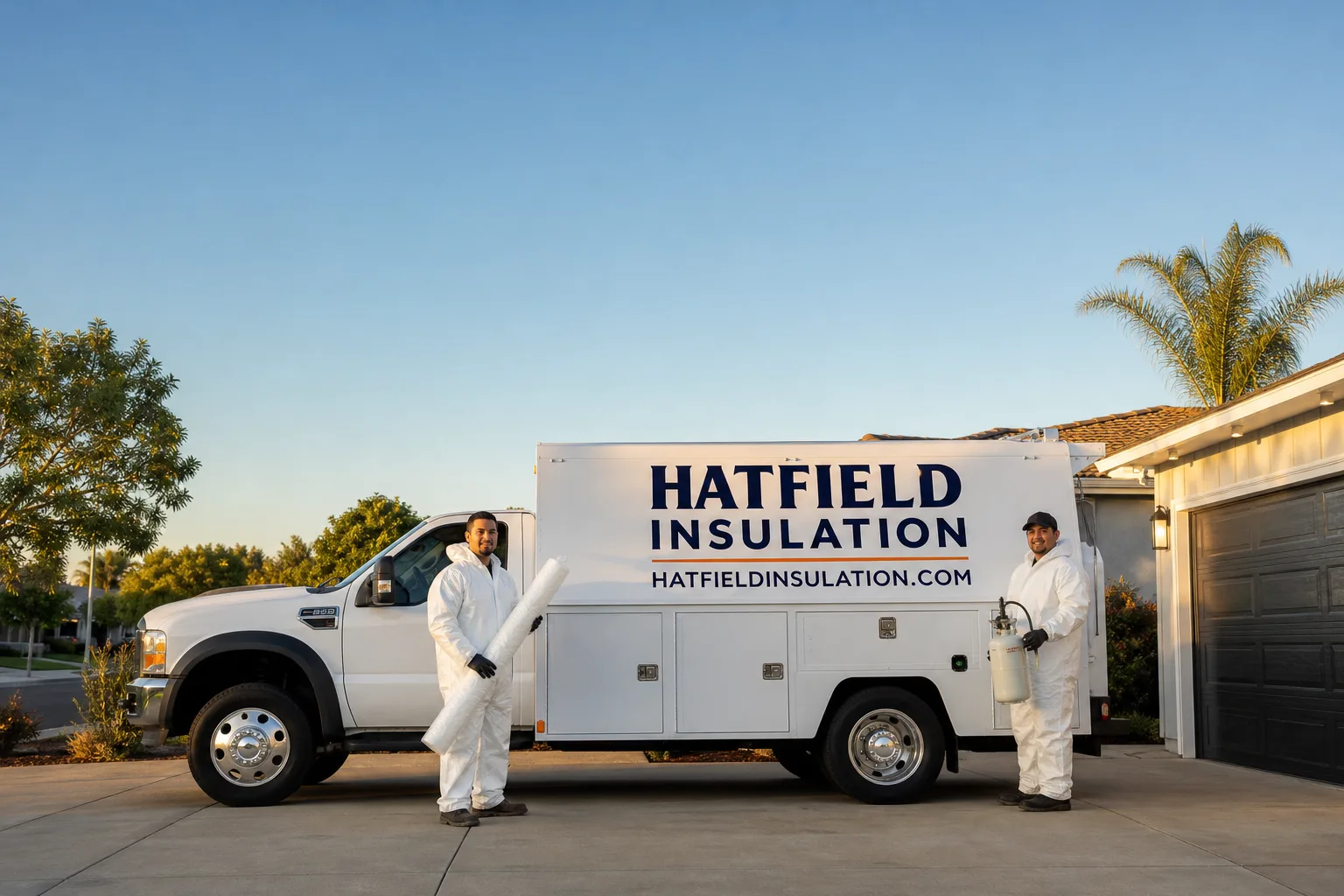
Fast, Reliable Spray Foam Insulation Across Placentia
Spray foam insulation in Placentia typically costs $2.50 – $7.50 per board foot installed depending on whether you choose open-cell or closed-cell, with most whole-attic projects landing between $4,500 and $11,000. We serve every Placentia ZIP code, 92870 and 92871, and can usually schedule an estimate within the same week you call. If you’re fighting a hot back bedroom in a 1940s bungalow off Chapman Avenue or a tract home near Golden Elementary that never holds its temperature, the fix is often foam done right. Call (866) 970-6477 and we’ll walk through what your house actually needs.
Our crews know Placentia’s housing stock better than most because we’ve worked through the same problems you’re dealing with. The old citrus-era homes near the town core were built when energy was cheap and insulation was an afterthought. The 1960s and 70s tracts on the east side have settled fiberglass batts that stopped performing decades ago. Neither situation is identical, and neither responds to a one-size-fits-all foam job. That’s exactly why we approach every Placentia home as its own project.
Why Hatfield Insulation Is Placentia’s Preferred Spray Foam Insulation Company
Placentia homeowners keep calling us back because we’re honest about where spray foam belongs and where it doesn’t. Nate Holloway built Hatfield Insulation around a simple idea: stock enough material options that we never have to push the wrong product just to make a sale. That matters in a city with as much housing variety as Placentia. We work across eight insulation brands including Owens Corning, Icynene, Demilec, and GreenFiber, so if closed-cell foam isn’t right for your stucco-clad ranch, we’ll tell you. If rim joist sealing is the smarter first move on your 1930s bungalow, we’ll scope that before quoting you an attic you don’t need yet.
Our response time is built around Placentia’s geography. We’re based in Fullerton, which means we can reach homes off Yorba Linda Boulevard, Rose Drive, or Alta Vista Street without burning half a day in traffic. Most estimates happen within a week of your call, and we keep appointments on time. The last thing you need is a contractor who treats Placentia like a distant afterthought.
We’re also the only trade we perform. Insulation is our entire focus, not a side line for a plumbing or HVAC crew. That depth matters when you’re dealing with knob-and-tube wiring in a 1920s attic or calculating Title 24 performance for a mid-century tract home. Every estimator and installer on our team is calibrated to insulation standards, not split across unrelated trades.
Rim Joist Spray Foam in Placentia
Rim joist spray foam in Placentia runs $8 – $14 per linear foot installed, and it’s the single highest-impact upgrade we do on the older citrus-era bungalows around the old town core. The rim joist is the band of framing where your floor meets the foundation, and in homes that predate modern building codes, it’s a string of unsealed gaps. Hot summer air pours in through those openings while cooled air escapes. We seal each bay with open-cell Icynene or Demilec foam applied directly to the rim board, cutting both air movement and the stack effect that pulls hot attic air down through the walls.
Placentia homeowners ask for this when they notice hot floors in summer, cold drafts in winter, or pest activity along the foundation line. Spiders and rodents follow the same gaps. Closed foam blocks both. But on older homes, we don’t spray blind. Many rim joist bays in Placentia’s 1920s and 30s stock still contain original wiring, and you can’t safely encase legacy conductors in expanding foam. We survey first, shield what needs shielding, and only then apply the foam. That’s the difference between a job that lasts 30 years and one that creates a problem you’ll find later.
Why rim joist sealing comes first on older Placentia homes
Hot air doesn’t wait for you to decide. If your attic is uninsulated and your rim joists are open, sealing the rim stops the pressure difference that makes the house feel drafty from day one. It also gives your attic insulation a chance to perform once it’s installed. We sequence the work in that order for a reason: rim first, attic second.
What to expect during the survey
We inspect each accessible joist bay with the homeowner present. You’ll see what we see, including any wiring that needs protection before foam goes in. The actual spray typically takes under half a day for a standard Placentia bungalow, and the foam cures in under a minute. You’ll notice the change within the first week of hot weather.
Crawl Space Spray Foam Insulation in Placentia
Crawl space spray foam insulation in Placentia runs $3,200 – $8,900 for a full encapsulation depending on square footage and joist depth, and it solves a problem most homeowners don’t know they have until the hardwood floors start cupping. Many of Placentia’s 1960s and 70s tract homes sit over vented crawl spaces that let damp air rise into the living area every single day. Closed-cell foam applied to the crawl space walls and rim area turns that space into a sealed buffer, cutting humidity transfer and keeping the floors above closer to room temperature.
This work matters most in summer, when Placentia’s inland heat pushes warm humid air into cool crawl spaces and creates condensation. We’ve seen joist bays dripping in August on homes along Bastanchury Road. Sealing the space doesn’t just help comfort; it protects the framing from slow moisture damage. Hatfield’s installers know how to balance venting and sealing so you’re not trading humidity for stale air.
Encapsulation for Placentia’s tract homes
On east-side ranch houses built with pier or stem wall foundations, the crawl space frequently shares air with the house. Sealing the rim and perimeter walls with closed-cell Demilec foam cuts that exchange. We also address any existing moisture issues before spraying, because foam doesn’t fix a standing water problem.
When crawl space foam isn’t the first move
If you have original stucco walls that need to dry inward, we don’t recommend sealing the crawl space without a moisture assessment. Some Placentia homes need targeted air sealing and upgraded drainage first. We’ll tell you if that’s the case rather than sell you a foam job that works against your house.
Trusted Brands We Service in Placentia
We install and service spray foam systems from Icynene, Demilec, and GreenFiber across Placentia’s 92870 and 92871 ZIP codes. We keep a rolling stock of common materials at our Fullerton yard, which means most Placentia jobs don’t wait on a distributor shipment. That’s especially useful when you need a rim joist sealed before a heat wave hits. We also work with Owens Corning and Johns Manville for fiberglass and mineral wool applications, so if foam turns out to be the wrong call for your walls, we’re not stuck explaining why the only product we sell is the only recommendation we can make. Nate Holloway’s rule is simple: the house picks the material, not the other way around.
Common Spray Foam Insulation Problems We See in Placentia Homes
- Foam hiding knob-and-tube wiring. We’ve opened attics in Placentia’s citrus-era bungalows and found active knob-and-tube runs crossing the exact joist bays where a previous contractor wanted to spray. Encasing those conductors in foam traps heat and can push wiring past its safe operating temperature. We survey and shield before any foam touches those bays.
- Closed-cell against stucco that can’t dry outward. Older Placentia ranch homes rely on inward drying to release moisture that penetrates the stucco. Sealing those walls with closed-cell foam creates a vapor trap. We steer those jobs toward rim joist and crawl space work rather than risk the framing.
- Over-spraying low, vented attics. East-side tract homes from the 60s and 70s have attics built for ventilation. When that venting gets blocked by aggressive foam application, the 120°F+ summer attic heat has nowhere to go and the house gets hotter, not cooler. Proper foam work preserves airflow paths.
- Ignoring the stack effect on two-story additions. Many Placentia homes have second-story additions that were insulated differently than the original footprint. Unsealed rim joists at the addition’s floor line let hot air migrate through the wall cavities. We check those transitions every time.
Pricing for Spray Foam Insulation in Placentia, CA
Here’s what Placentia homeowners should expect. Open-cell spray foam runs $2.50 – $4.50 per board foot installed, while closed-cell runs $5.00 – $7.50 per board foot. A 1,200 sq ft attic typically needs $5,400 – $9,000 in open-cell or $8,000 – $14,000 in closed-cell. Rim joist work runs $8 – $14 per linear foot, and a standard bungalow with 100 – 150 linear feet of rim lands between $800 and $2,100. Crawl space encapsulation runs $3,200 – $8,900. The variables are square footage, foam depth, and whether we’re working around legacy wiring. We give you a written line-item quote before any work starts, and estimates are free. Call (866) 970-6477 to schedule one.
We don’t use vague “it depends” pricing. You’ll get actual numbers tied to your house, not a generic range pulled from a national chart. And because we’re a Spray Foam Insulation specialist rather than a general contractor, the quote reflects exactly what the job needs, nothing padded and nothing missing.
We Also Serve Cities Near Placentia
Hatfield Insulation covers the full north Orange County corridor. If you have family in Brea, Anaheim, Fullerton, or Yorba Linda, point them our way. We’re also the team behind Spray Foam Insulation in Placentia, and we treat every one of these communities with the same one-trip, done-right standard. Same crew, same materials, same straight answers.
Serving Placentia, CA — Our Local Coverage Area
We’re based in the Placentia area and know this community well. Use the map below to see our service coverage — if you’re nearby, we can almost certainly help.
FAQs About Spray Foam Insulation in Placentia
Yes, but only after we survey and shield the wiring. We won’t spray foam over active knob-and-tube conductors because encasing them traps heat. On a 1940s bungalow off the old town core, our crew pulled back compacted fiberglass to find bare knob-and-tube runs crossing every rim joist bay, so we shielded the circuits and sealed the rim with Icynene before touching the attic. The homeowner had been chasing a hot back bedroom all summer, and closing those rim joist gaps dropped the heat gain enough that the room finally held its setpoint. Call (866) 970-6477 and we’ll scope yours the same way.
Yes, if it’s done wrong. Low, vented attics in Placentia’s 1960s and 70s tract homes depend on airflow to shed summer heat that can push past 120°F. If someone sprays foam without preserving those vent paths, the heat gets trapped and the house gets hotter. Proper spray foam work in these attics either moves the thermal boundary to the roofline while keeping intake and exhaust vents clear, or it leaves the attic floor insulation alone and focuses on air sealing instead. We inspect the venting before we quote, not after.
They do. Detached garages and workshops on Placentia’s larger lots are usually uninsulated shells with direct sun on the roof and no conditioned air to offset the heat gain. Foaming the roof deck with open-cell keeps the space usable in summer without the moisture risk of closed-cell on a metal roof. We also seal the rim and any wall penetrations so the foam actually holds. The material choice depends on what you use the space for. A woodshop with high BTU output needs different handling than a car garage that just gets too hot in August.
Generally no, and we say that as a company that installs closed-cell foam every week. Older Placentia ranch homes with original stucco rely on inward drying to release moisture that soaks through the plaster. Closed-cell foam creates a vapor barrier directly against that surface, which can trap moisture in the original 1920s to 40s framing. On those homes we steer toward rim joist sealing, crawl space work, and attic insulation rather than wall foam. If closed-cell makes sense anywhere, it’s the rim and the crawl, not the stucco wall cavity.
Spray foam with an R-value of R-38 or higher in the attic meets or exceeds Title 24 energy expectations for Placentia’s east-side tract homes, assuming the install also includes proper air sealing. Many of those houses still have the original settled fiberglass batts at R-11 to R-19, which no longer meets current standards. We bring those attics up to code with open-cell foam at the roofline or a dense blown-in application if the attic is vented. Either way, the final number on paper has to match the actual performance, and we inspect for both. Call (866) 970-6477 for a free estimate and we’ll tell you exactly where your home stands.
Call Hatfield Insulation for Spray Foam in Placentia
If you live in Placentia and you’re tired of rooms that won’t hold a setpoint, floors that radiate heat in August, or energy bills that climb every summer, call us. Nate Holloway and the Hatfield Insulation team will give you a straight answer about what your house needs and what it doesn’t. We serve all of Placentia, including the 92870 and 92871 ZIP codes, with free estimates and same-week scheduling in most cases. Call (866) 970-6477 today.
Written by Nate Holloway, Owner at Hatfield Insulation, serving Placentia and north Orange County with material-agnostic insulation recommendations and three installation methods under one roof.