Attic Insulation Pricing Breakdown: What Fullerton Homeowners Pay in 2026
Most Fullerton homeowners will pay between $1,800 and $4,200 to insulate a standard 1,200 to 1,500 square foot attic in 2026, with material choice driving the biggest swing. Blown fiberglass lands on the low end, blown cellulose occupies the middle, and spray foam carries the highest installed cost per square foot. If you’d rather skip the research and get a straight number for your house, call (866) 970-6477 and we’ll give you a free estimate with every line item itemized.
Here’s the thing most pricing guides won’t tell you: the lowest quote in Fullerton is almost always missing something. Air sealing labor, debris removal, ventilation correction, or all three. Those line items add $800 to $2,400 to a job that a discount contractor simply doesn’t include, because including them would make the quote look expensive next to a competitor who pretends they don’t exist. We’ll show you how to read the difference.
What Actually Drives Attic Insulation Cost in Fullerton
Attic insulation pricing in Fullerton breaks into four buckets: material cost, prep work, access difficulty, and code-required corrections. If you only look at the total, you’re comparing jobs that aren’t remotely the same. Here’s what each bucket actually costs.
Material costs range from roughly $0.80 to $2.50 per square foot for batt or blown products, and $3.50 to $7.00 per square foot for spray foam. But square-foot pricing is misleading. A 1,500 square foot attic with existing insulation that needs topping off might need $900 in material. That same attic gutted to the rafters and re-insulated to a higher R-value needs three times that. The condition of what’s already up there changes the material math completely.
Prep work catches homeowners off guard. If your attic has old, compacted insulation that’s been there since the Nixon administration, someone has to remove it before new material goes in. Removal runs $1.00 to $2.00 per square foot. Air sealing, which means caulking and foaming the gaps around plumbing penetrations, electrical boxes, and top plates, adds $400 to $900 on a typical Fullerton home. Skip it and your new insulation performs like a screen door on a submarine.
Access difficulty is the silent line item. A scuttle hole in a hallway closet is easier to work through than a pull-down stair in a garage. A hatch that’s 22 inches wide slows installers down compared to a 30-inch opening. Most Fullerton quotes don’t explain this, so homeowners see a $300 difference between bids and assume someone’s padding. Usually they’re not. They’re just quoting different physical jobs.
Code corrections apply to older Fullerton homes. Attics built before current California energy codes often lack proper baffles at the eaves, which keep insulation from blocking soffit vents. Installing baffles runs $3 to $8 per linear foot including labor. If your 1960s ranch never had them, a legitimate contractor should flag it. A cheap quote won’t mention it, because mentioning it costs them the job.
Material-by-Material Pricing for Fullerton Homes in 2026
Here’s the line-item breakdown for the four materials most commonly installed in Fullerton attics. These are installed price ranges per square foot, including labor, for a standard attic that doesn’t need gutting first.
| Material | Installed Cost per Sq Ft | Typical 1,500 Sq Ft Attic | What Pushes It to the High End |
|---|---|---|---|
| Blown Fiberglass | $0.90 – $1.50 | $1,350 – $2,250 | Deep fills for high R-value targets, difficult access |
| Blown Cellulose | $1.10 – $1.80 | $1,650 – $2,700 | Old material removal, air sealing add-ons |
| Rockwool Batts | $1.40 – $2.10 | $2,100 – $3,150 | Irregular joist spacing, low clearance areas |
| Spray Foam (Open Cell) | $2.50 – $4.50 | $3,750 – $6,750 | Roof deck application, full encapsulation jobs |
| Spray Foam (Closed Cell) | $4.00 – $7.00 | $6,000 – $10,500 | Ridge-to-eave coverage, vaulted ceiling complexity |
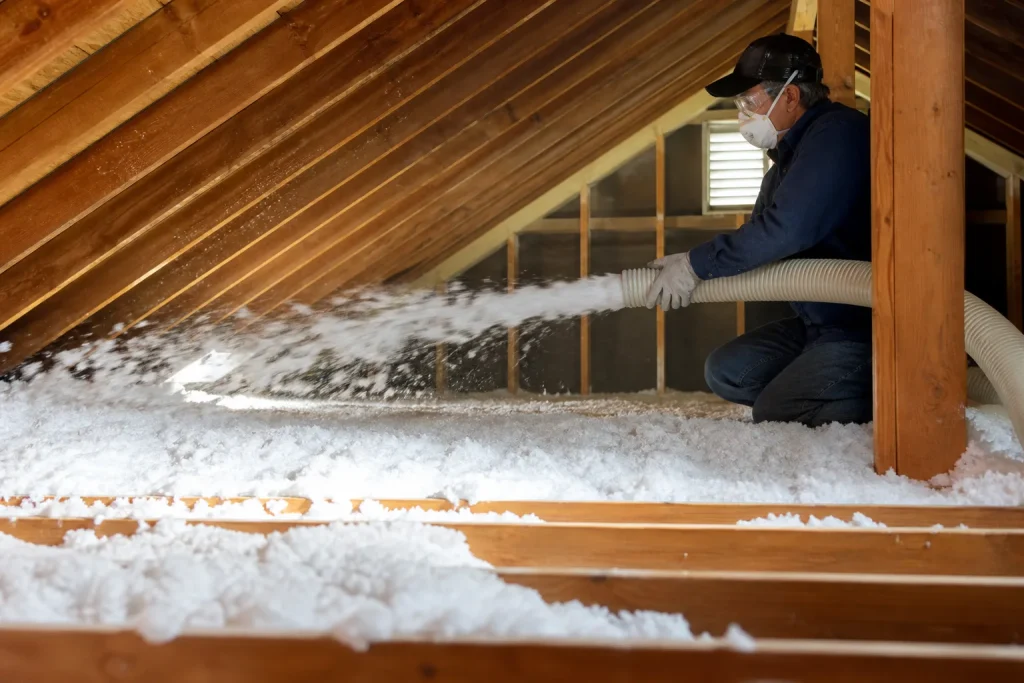
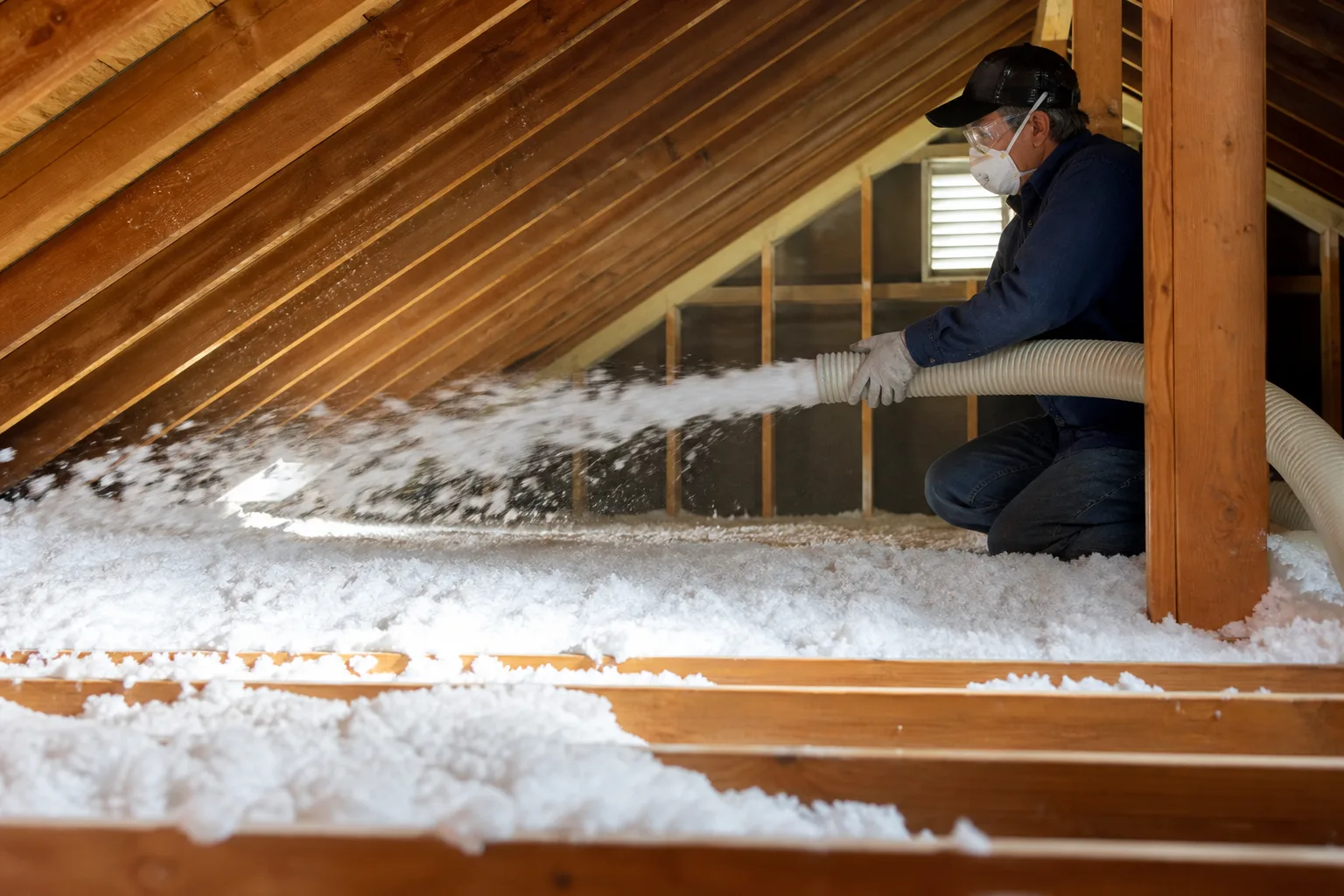
These ranges reflect what we see across Fullerton neighborhoods from downtown up through the hills. Blown fiberglass remains the workhorse for budget-conscious homeowners who want solid performance without the spray foam price tag. We install CertainTeed’s blown fiberglass in a lot of Fullerton attics precisely because it balances R-value per inch against installed cost better than most alternatives. Cellulose, like GreenFiber, holds an edge in homes where air infiltration is the bigger problem, because the material’s density chokes off airflow better than loose fiberglass does.
Spray foam is the outlier. It costs more, sometimes double or triple the bill. But in a Fullerton home where the attic houses the HVAC system or the homeowner wants to convert the space later, open-cell foam from a brand like Icynene pays back through air sealing you can’t replicate with batts. The decision hinges on what your attic actually needs, which is why we recommend getting the attic looked at before you pick a material.
For a deeper look at what Spray Foam Insulation in Fullerton involves, check our service page. If blown-in materials are the route you’re leaning toward, our Blown In Insulation in Fullerton breakdown covers what to expect from prep through cleanup.
The Hidden Line Items Discount Quotes Leave Out
Here’s the fastest way to read an attic insulation quote in Fullerton: look for what’s not there. A legitimate quote itemizes these four things. A discount quote doesn’t, which is how it comes in $1,500 cheaper.
- Old material removal. If your attic has compacted fiberglass or, worse, vermiculite from the mid-century era, someone has to bag it and haul it out. That’s $1.00 to $2.00 per square foot, and no amount of new insulation on top fixes what’s underneath. Fullerton homes built from the 1950s through the 1970s often hit this line item.
- Air sealing. Gaps around recessed lights, plumbing vents, and top plates let conditioned air leak into the attic year-round. Sealing them before insulating runs $400 to $900 and improves performance more than adding another five inches of insulation. Quotes that skip this line are cheaper and less effective.
- Baffle installation. Every soffit vent needs a baffle to keep insulation from blocking it. Without baffles, you get moisture problems and mold in Fullerton’s coastal-influenced climate. Expect $3 to $8 per linear foot when they’re needed.
- Ventilation inspection and correction. If your attic has ridge vents but no soffit intake, or soffit vents but no ridge exhaust, the system doesn’t work. Correcting it might add $200 to $600. A contractor who doesn’t look up and check ventilation isn’t doing the job, just selling you material.
We pulled an old insulation job out of a garage-side attic in a 1960s ranch near the Fullerton Loop a while back where the previous contractor had blown nine inches of fiberglass directly over a bathroom fan venting into the attic. No bathroom exhaust correction, no air sealing, no baffles. The homeowner paid $1,900 for insulation that trapped moisture against the roof deck. The fix cost more than the original job. That’s the expensive way to shop for the cheapest quote.
Why Structural Differences Change the Same-Sized Job by $1,500
Take two attics, both 1,500 square feet in Fullerton. One is in a 1960s single-story ranch with a hip roof and a scuttle access through a hallway closet. The other is in a 1990s two-story with a truss-framed attic and a full pull-down stair in the upstairs hallway. The same material at the same R-value can cost $1,500 more in the first house. Here’s why.
The 1960s ranch likely has a low-slope roof, which means less headroom, which means installers work closer to the deck, which slows everything down. It might have old batt insulation that needs removal. It might have soffit vents that were painted over decades ago and need to be cleared. The scuttle access means every bag of material and every tool goes up through a 22-inch opening in a closet ceiling. Labor hours climb.
The 1990s two-story, by contrast, might have R-19 batts that are still functional and just need topping off. The pull-down stair gives installers a full-body opening. Truss framing means clean, predictable cavities for blown-in material. The job goes faster and has fewer surprises.
Neither quote is dishonest. They’re just different jobs wearing the same square footage. This is why a per-square-foot price from a Google search leads Fullerton homeowners astray before they ever pick up the phone. The useful number is the line-item total for your specific attic, not a generic square-foot range.
Rebates and Tax Credits Fullerton Homeowners Can Use in 2026
Before you compare bids, know what money you can claim back. The federal Energy Efficient Home Improvement Credit remains available in 2026, offering 30% of qualifying insulation costs up to a $1,200 annual cap for insulation and air sealing. This is a tax credit, not a deduction, so it reduces what you owe dollar for dollar, provided the insulation meets current IECC standards and is installed in your primary residence.
California-specific programs shift more often. Southern California Edison and Anaheim Public Utilities (Fullerton falls under Anaheim’s electric service territory for most homes) have run attic insulation rebate programs in recent years, typically in the $0.10 to $0.20 per square foot range for qualifying upgrades. These programs are frequently tied to an energy assessment or a minimum R-value improvement, and funding windows can close without much notice. Check with your utility before you sign a contract, because the rebate is often applied based on what the contractor can document.
The practical play: have your contractor itemize the insulation material and the air sealing separately. The IRS lets you claim the credit on both line items. If your quote lumps them together, you’ll have a harder time documenting the split when tax season arrives. Most Fullerton homeowners who do this right end up recovering $800 to $1,200 of the job cost across federal and utility programs.
When to call a pro: if your attic has wiring from the original build, vermiculite that might contain asbestos, or roof leaks you can see daylight through, you need an insulation contractor who will flag those issues rather than cover them up. We tell Fullerton homeowners this openly: an insulation crew that doesn’t point out pre-existing problems is not saving you money. They’re deferring a bigger bill.
How to Read a Fullerton Attic Insulation Quote
When you sit down with two or three bids from Fullerton contractors, put them side by side and look for these six line items. If any are missing, ask why. If the answer is “we include that in the price,” ask for it written down. Verbal assurances don’t hold up when the attic is under-insulated and you’re wondering where your money went.
- Square footage measured – not estimated. If the quote says “approximately 1,200 sq ft” and doesn’t show a measurement, the installer didn’t measure. That’s a red flag.
- Material brand and product name. “Fiberglass” is not a product. “CertainTeed InsulSafe blowing wool” is. You want the brand because it tells you the warranty applies and the material is traceable.
- Target R-value stated in writing. “R-38” means something. “More insulation” means nothing. Fullerton’s climate zone calls for R-30 to R-49 in attics depending on the home’s construction, and your quote should name a number.
- Prep work itemized. Removal, air sealing, baffles, ventilation. If these lines are absent, the contractor either doesn’t intend to do them or doesn’t intend to charge for them, and the second option is rare.
- Access notes. The quote should mention your scuttle, hatch, or pull-down stair. If the estimator never looked at how they’d get into the attic, the labor estimate is a guess.
- Warranty terms written, not verbal. Manufacturer warranties come from brands like Owens Corning and Rockwool. Installation workmanship warranties come from the contractor. Both should be on paper.
If you’ve read your quote and realized the cheapest bid is missing three of these six items, you now understand the pricing gap. That’s not price shopping. That’s spec shopping.
We work across eight insulation brands including CertainTeed, Rockwool, and Icynene because no single product wins every Fullerton attic. A 1960s ranch near Cal State Fullerton needs something different than a 2005 build in the hills above the 57. Our estimators quote what the house actually needs, not what we happen to have the most inventory of. For a breakdown of what goes into a proper attic insulation job, see our Attic Insulation in Fullerton page.
The Bottom Line
Fullerton attic insulation pricing in 2026 runs from about $1,350 on the low end for a simple blown-in job to over $10,000 for a full closed-cell spray foam encapsulation. Most homes land somewhere in the $2,000 to $4,500 range. The price variance doesn’t mean contractors are shady. It means the scope of legitimate work varies enormously by attic condition, access, and existing ventilation.
Shop for line items, not totals. Ask for material brands. Claim your federal credit. And if the attic has old insulation, blocked soffits, or bathroom fans venting where they shouldn’t, address those before another inch of new material goes in. If you’re in Fullerton and want a quote that itemizes everything we’ve covered here, Hatfield Insulation offers free estimates. Call (866) 970-6477 and we’ll schedule an attic inspection at no charge.
Frequently Asked Questions
How much does attic insulation cost per square foot in Fullerton? Installed attic insulation in Fullerton runs $0.90 to $2.10 per square foot for blown fiberglass, blown cellulose, or Rockwool batts, with spray foam running $2.50 to $7.00 per square foot. The per-square-foot number is only useful for rough planning; your actual total depends on attic condition and prep work. Call (866) 970-6477 for a free line-item estimate.
Is it cheaper to repair or replace attic insulation in Fullerton? Topping off existing insulation is cheaper than full removal and replacement, usually by $1,000 to $2,000 on a typical Fullerton home. However, if the existing material is compacted, moldy, or contaminated with rodent droppings, replacement is the better long-term value and often the only way to hit target R-value. We’ll assess what’s salvageable during a free inspection.
Can you install attic insulation the same day in Fullerton? Yes, most blown-in insulation jobs in Fullerton attics with standard access can be completed in a single day, typically four to six hours. Jobs requiring old material removal, air sealing, or extensive baffle work may run into a second day. Call (866) 970-6477 and we’ll give you a realistic timeline before you commit.
What R-value does my Fullerton attic need? Most Fullerton homes need R-30 to R-49 in the attic depending on whether the home has ductwork in the attic space, the age of the building, and how the attic is vented. California energy codes and utility rebate programs set the minimums, but your specific target should come from an attic inspection, not a generic chart. If you’re ready to get specific, the team at Hatfield Insulation home can help.
Written by the team at Hatfield Insulation, serving Fullerton since 2017.
Need Insulation Help?
Call Hatfield Insulation — licensed & insured, here with fast after-hours help in Fullerton.
(866) 970-6477