How to Choose the Right Insulation Company in Fullerton
Choosing an insulation contractor in Fullerton comes down to three things: whether they can explain why they’re recommending a specific material, whether their quote shows real diagnostic work, and whether they stand behind the install with a clear warranty path. Most homeowners pick based on price alone. That’s the mistake that costs thousands later. If you’d rather skip the vetting process, call (866) 970-6477 and we’ll walk you through it.
Here’s the thing most people in Fullerton don’t realize until it’s too late: California’s C-2 insulation license exam tests business law and workplace safety. It does not test whether the contractor knows the difference between open-cell and closed-cell spray foam. It does not test whether they can calculate ventilation ratios for an attic in a coastal-influenced climate like Orange County. Licensing is a floor. It tells you the contractor is legal. It tells you nothing about whether they’re competent.
So how do you actually evaluate an insulation company? You ask questions that force them to demonstrate knowledge. The rest of this guide walks you through exactly what to ask and what good answers sound like.
Key Takeaways
- Licensing is baseline compliance, not proof of skill. Dig deeper.
- Ask how they determine R-value recommendations. Vague answers are disqualifying.
- Air sealing should precede insulation. If they skip it, walk away.
- Read the quote as a competence test. One line that says “attic insulation” is a red flag.
- Know who backs the warranty: manufacturer, contractor, or both.
Why Fullerton Homes Need More Than a Generic Insulation Recommendation
Fullerton sits in a specific microclimate band. Summer temperatures push into the 90s and the marine layer keeps mornings damp, especially west of Euclid toward the 5 freeway. Homes here fight two problems at once: heat gain in summer afternoons and moisture accumulation in attics that don’t ventilate properly. A contractor who recommends the same R-value to every homeowner in Orange County isn’t thinking about your attic’s actual conditions.
The right insulation for a 1960s ranch in the Maple neighborhood isn’t automatically the right insulation for a two-story build in Amerige Heights. Different ceiling structures, different roof pitches, different existing ventilation setups. If a contractor hasn’t been in your attic, they’re guessing. We’ve pulled old fiberglass out of attics in Fullerton where the previous installer never checked whether the existing vents were still clear. That’s not insulation work. That’s material placement.
This is where the multi-material portfolio matters. A contractor who only installs fiberglass will recommend fiberglass. A contractor who only sprays foam will recommend foam. Neither is necessarily wrong, but neither is making a recommendation based on your house. At Hatfield, we work across eight brands including Owens Corning, Rockwool, and Icynene because no single material wins every application. The right question to ask is not “what do you install?” but “why would you choose X material for my attic specifically?”
The Three Technical Questions That Separate Specialists From Salespeople
You can learn more about a contractor in ten minutes of questioning than from forty online reviews. Here are the three questions that matter most in Fullerton, and what real answers sound like.
1. “How do you determine the R-value my home needs?”
A competent insulation contractor will mention at least three factors: your existing insulation levels, your home’s square footage and ceiling configuration, and Fullerton’s climate zone (which is Zone 3, for the record). They should reference California Title 24 requirements, which set minimum R-values for residential attic insulation. A weak answer is “well, R-30 is what we usually do” or “whatever the code says.” If they can’t explain why a specific number applies to your house, they’re reciting a script, not solving a problem.
2. “Do you air seal before insulating?”
If the answer is anything other than “yes, and here’s what that includes,” stop the conversation. Insulation slows heat transfer. Air sealing stops conditioned air from leaking through gaps around recessed lights, plumbing penetrations, wiring chases, and top plates. Putting insulation over an unsealed attic is like wearing a heavy coat with the zipper open. Fullerton homes with recessed lighting are especially prone to this. We’ve measured 20 percent energy loss through unsealed ceiling penetrations in single-story homes around Fullerton College. An insulation contractor who skips air sealing is charging you for half a job.
3. “How do you verify ventilation is adequate?”
Attic ventilation matters more in Fullerton than in inland cities because of the coastal moisture. An over-insulated, under-ventilated attic traps humid air. That leads to mold on roof decking and premature shingle failure. A real specialist will check your existing soffit vents, ridge vents, or gable vents before adding insulation. They should be able to calculate net free vent area against attic square footage (the standard ratio is roughly 1:150 with a few exceptions). If the contractor seems confused by the question, that’s your answer.
Manufacturer Certifications: What They Actually Mean
Walk through the insulation aisle of any trade show and you’ll see walls covered in certification logos. Most are meaningless to you as a homeowner. Some matter. Here’s the short version.
SPFA (Spray Polyurethane Foam Alliance) certification is the one to ask about if you’re considering spray foam. It means the installer has passed independent testing on application technique, safety protocols, and equipment handling. Open-cell and closed-cell foam are chemically different products with different expansion rates, cure times, and application windows. An uncertified installer can make an expensive mess. We install Icynene and Demilec foam products, and the manufacturer training for each is distinct because the formulations genuinely behave differently.
BPI (Building Performance Institute) certification signals broader building-science knowledge: air leakage testing, combustion safety, ventilation assessment. It’s less common among insulation-only contractors but worth a lot when present. It means the contractor thinks about the house as a system, not just a cavity to fill.
What about “Owens Corning Certified Contractor” or “CertainTeed Select”? These are real programs; manufacturers require installers to complete product training and agree to quality standards. The value to you is straightforward: if a contractor installs Owens Corning product poorly, Owens Corning’s warranty process gives you a documented path to remediation. But don’t confuse product certification with building-science competence. A contractor can be certified to install a specific fiberglass batt brand and still know nothing about ventilation ratios.
Ask this: “What manufacturer certifications do you hold, and what did the training actually cover?” If they say “we’re certified with all the major brands” but can’t name the training, that’s a red flag.
How to Read an Insulation Quote as a Competence Test
The quote document tells you more about a contractor than their sales pitch. Here’s what a real insulation scope looks like versus what you should reject.
A vague quote looks like this:
- “Attic insulation – R-38 – $4,200”
- “Includes materials and labor”
That’s it. No material named. No brand. No air sealing scope. No ventilation note. No mention of existing insulation removal. You cannot evaluate this quote because there’s nothing in it but a number.
A competent quote looks like this:
- Material specified: “Owens Corning ProPink L77 blown-in fiberglass” (or whichever material was recommended, with brand name)
- Installed R-value stated, not just bag count
- Air sealing scope listed as a separate line item: “seal all top plates, wire penetrations, and recessed can housings with fire-rated foam”
- Ventilation check noted: “verify existing soffit and ridge vent net free area before final coverage”
- Existing insulation removal specified if needed: “remove and bag old fiberglass batts in main attic, approx. 900 sq ft”
When a Fullerton homeowner shows us a competitor quote like the first one, we tell them what it means: the contractor hasn’t put thought into the house. They’ve put a per-square-foot price on a category. Insulation isn’t a category. It’s a material decision made in context. Our quotes name the material, the brand, the R-value, and the scope because anything less makes it impossible for you to compare apples to apples.
Three Warranty Questions Every Fullerton Homeowner Should Ask
Warranties in insulation are not all created equal, and the differences matter when something goes wrong two years from now. Here are the three questions to ask before signing anything.
1. “What exactly is covered?”
Does the warranty cover material defects only, or also installation workmanship? A manufacturer warranty covers the product. If the fiberglass settles or the foam cracks because it was applied wrong, the manufacturer will point at the installer. If the installer warranty is “we’ll come fix it” with no written terms, you have nothing. Ask for both warranties in writing, and ask which one covers what.
2. “Who backs it – the manufacturer or your company?”
This is where the brand-name products earn their place. Owens Corning, CertainTeed, Rockwool, and Icynene all offer manufacturer warranties that exist independently of the contractor. If your installer goes out of business next year, the material warranty still applies. That’s a real protection. A contractor installing generic, unbranded product is offering you their word and nothing else. In Fullerton’s contractor turnover environment, that’s a meaningful difference.
3. “What voids the warranty?”
Every warranty has exclusions. Common ones: roof leaks that saturate the insulation, pest damage, modifications made by other contractors after install, or failure to maintain attic ventilation. A contractor who can’t answer this question hasn’t read their own warranty terms. The red flag here isn’t that exclusions exist. It’s when the contractor doesn’t know them.
When to Call a Pro – and Why This Isn’t a DIY Job
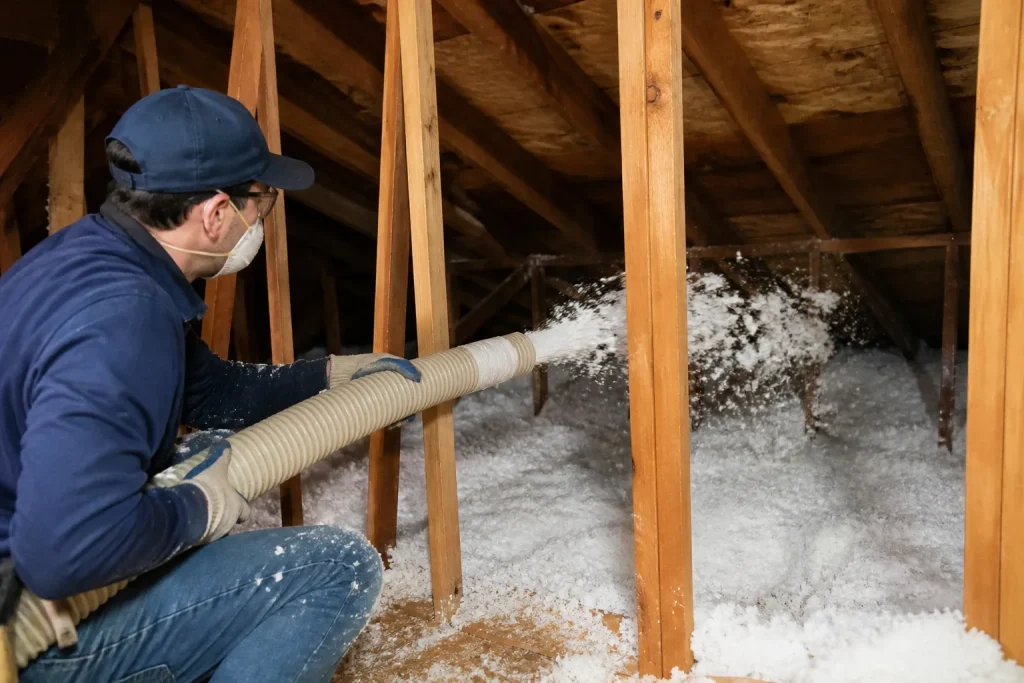
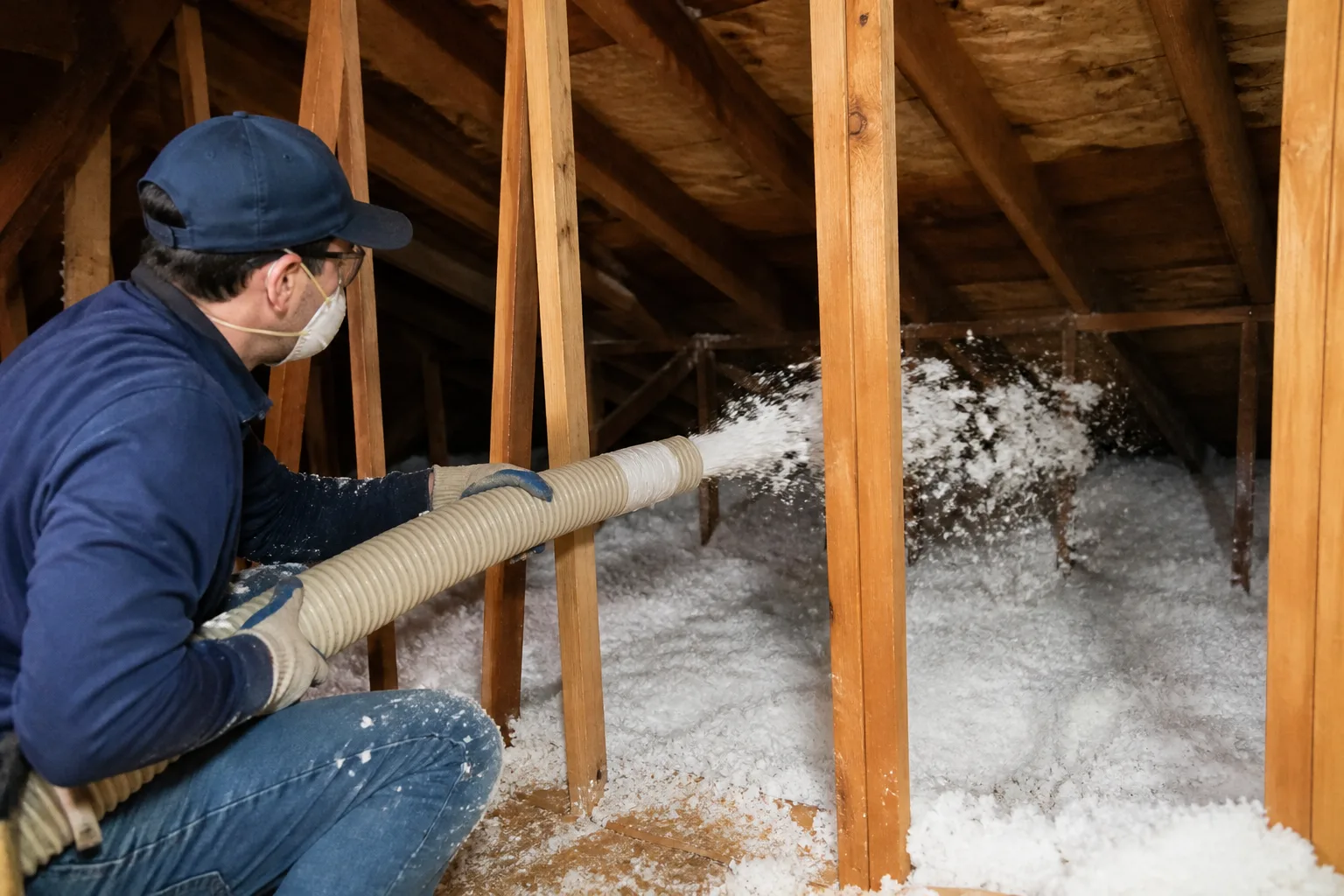
There are home improvement projects where the weekend warrior approach makes sense. Insulation is not one of them. Blown-in fiberglass requires equipment and technique. Spray foam requires chemical training and protective gear. Even fiberglass batt installation done wrong, compressed around wiring or stuffed into cavities without proper depth markers, fails to deliver the rated R-value.
We once inspected an attic in the area where the homeowner had spent three weekends installing batts. They’d compressed the material by roughly 40 percent to fit around electrical boxes and duct runs. The effective R-value was maybe half of what they’d paid for in material. They’d done the work, spent the money, and gotten a fraction of the benefit.
If you’re dealing with an existing attic, a finished space, or a crawlspace, get a professional assessment. The cost of an estimate is zero. The cost of redoing bad work is the original material cost plus removal plus reinstallation.
Related services in Fullerton: Attic Insulation in Fullerton, Spray Foam Insulation in Fullerton, and Blown In Insulation in Fullerton. Or start at the Hatfield Insulation home page to see the full scope of what we do.
The Bottom Line
Choosing an insulation company in Fullerton isn’t about finding the lowest bid. It’s about finding a contractor who can explain their recommendation, proves they’ve examined your house, and stands behind the work with real warranty coverage. Ask the three technical questions: R-value determination, air sealing, and ventilation verification. Read the quote critically. If it says “attic insulation” as a single line item with no material, no brand, and no scope details, that’s your signal to keep looking.
If you’re in Fullerton and need help, Hatfield Insulation offers free estimates. We work across eight brands and three installation methods because your attic has specific conditions that deserve a specific answer. Call (866) 970-6477 and we’ll tell you straight what your house actually needs.
Frequently Asked Questions
Attic insulation in Fullerton typically ranges from $2,500 to $6,000 depending on square footage, material choice, and whether existing insulation needs removal. Spray foam runs higher, blown-in fiberglass and cellulose run lower. The only way to get an accurate number is an attic inspection, because two 1,200-square-foot homes can have completely different scopes. Call (866) 970-6477 for a free estimate.
Fullerton sits in California Climate Zone 3, where Title 24 building standards call for R-38 in most attic applications. However, the right number for your home depends on existing insulation, attic ventilation, and whether you’re doing walls, floors, or ceilings. A proper assessment starts with looking in the attic. If a contractor quotes an R-value without visiting your home, be skeptical.
It depends on your attic configuration, your budget, and whether you’re air sealing the space. Spray foam delivers higher R-value per inch and air-seals as it’s applied, making it strong for difficult roofline applications. Fiberglass, either batt or blown-in, is more cost-effective for standard ventilated attics. We install both because neither is universally correct. The right material is the one that matches your house.
In most cases, yes. Depending on current scheduling and material availability, we can often complete an attic insulation project within a week of the estimate. Spray foam projects may take slightly longer to schedule because the application requires specific weather conditions. Call (866) 970-6477 and we’ll give you a realistic timeline based on what your project actually involves.
Written by the team at Hatfield Insulation, serving Fullerton since 2017.
Need Insulation Help?
Call Hatfield Insulation — licensed & insured, here with fast after-hours help in Fullerton.
(866) 970-6477