
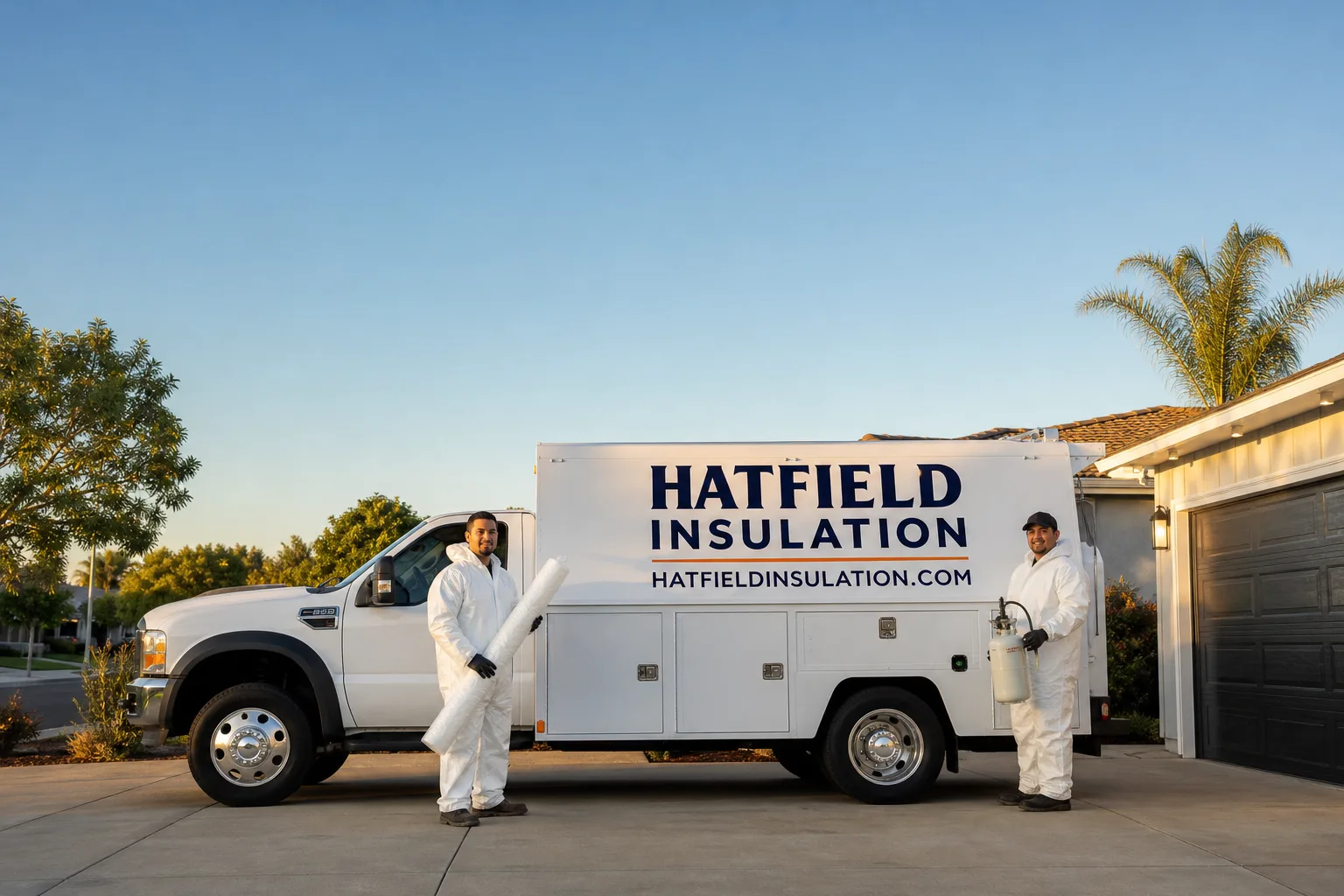
Fast, Reliable Spray Foam Insulation Across Cypress
Spray foam insulation in Cypress homes usually targets the places your builder never sealed: rim joists, top plates, and garage-to-house transitions. Most Cypress houses went up in the 1960s and 1970s, which means they were framed with vented attics and unsealed can-lights that have been quietly leaking conditioned air for fifty years. Our crews know those tract layouts well, and we get to Cypress calls fast. If your energy bills climb every August and your second floor never cools off, call (866) 970-6477 for a free estimate.
Nate Holloway and the Hatfield Insulation team work exclusively in insulation. We carry open-cell and closed-cell foam from Demilec and Icynene, plus fiberglass and mineral wool options when foam isn’t the right call. That matters in Cypress, where some jobs need targeted rim joist sealing and others need a full attic upgrade. We’ll tell you which one your house actually needs.
Why Hatfield Insulation Is Cypress’s Preferred Spray Foam Insulation Company
Homeowners in Cypress keep calling us back for one reason: we don’t push a single product line. Hatfield Insulation works across eight insulation brands and three installation methods, so the recommendation you get is driven by your home’s envelope, not by what we happen to stock. That’s rare in this trade. Most contractors carry one foam brand and fit every house to it. We fit the material to the house.
Our crews know the Cypress housing stock. We’ve worked in the tracts off Valley View Street, around Oak Knoll Park, and through the 90630 zip code enough to know what’s behind those stucco walls: original R-11-era batts, settled fill, and leaky top plates. When a homeowner near Lexington Park calls with a garage that bakes in the afternoon sun, we know exactly what we’re going to find before we open the attic hatch. Nate Holloway built the company around that kind of specialization; insulation is the only trade we perform. Estimators, installers, and quality checks are all calibrated to insulation performance, not split across plumbing or roofing crews.
Spray Foam Insulation is one of our three core installation methods, alongside attic batts and blown-in. For Cypress specifically, spray foam usually plays a supporting role rather than a full-house encapsulation. We’ll explain why below.
Rim Joist Spray Foam in Cypress
Rim joist spray foam is the single highest-value air-sealing job we do in Cypress tract homes. The rim joist is the band of wood that sits on top of your foundation wall, where the floor framing meets the outside wall. In 1960s and 1970s construction, that band was never sealed. Conditioned air from the house pours into the garage and attic through that gap, and unconditioned garage air pours back in. Spraying closed-cell foam along the rim joist and top plates closes that leak at the source.
A typical rim joist spray foam job in Cypress runs $900 to $2,100 depending on garage size, accessibility, and whether we’re also sealing the band above the garage door header. Smaller single-car garages on the older tracts land at the low end. Two-car garages with exposed joist cavities, or garages with drywall that needs partial removal, land higher. We’ll give you a firm number before any work starts.
Garage Envelope Sealing
Your garage shares walls and often a ceiling with your living space. When the rim joist and top plates leak, every degree of heat you pump into the house bleeds toward the attic through the garage. Sealing that boundary with closed-cell foam also blocks tailpipe fumes, dust, and unconditioned air from working their way into the house in winter. Cypress garages get hot; a sealed rim joist keeps that heat out of the living space instead of transferring through the wall cavity.
Top Plate and Can-Light Sealing
In many Cypress homes, we find the original attic insulation settled to a few inches, with unsealed can-lights and top plates leaking conditioned air straight into the attic. Foam-sealing those penetrations before adding blown-in fill is the difference between a real R-value improvement and money wasted. We spray a thin closed-cell bead along the top plates and around recessed light housings to stop that airflow, then the insulation goes on top and actually does its job.
Crawl Space Spray Foam Insulation in Cypress
Crawl space spray foam insulation in Cypress addresses a different problem: moisture, floor temperature, and air movement under single-story tract homes. Most Cypress crawl spaces are vented dirt or gravel with fiberglass batts shoved between floor joists that have sagged, absorbed humidity, and stopped insulating altogether. Spraying closed-cell foam on the crawl space walls or rim joists in that space blocks outside air and keeps floors warmer in the mild winters and drier through the summer.
Expect to pay $1,200 to $3,400 for a Cypress crawl space spray foam job, depending on square footage, access height, and whether we’re sealing walls, rim joists, or both. Tight crawls with limited access add labor time. We price by the job, not by the hour, so you’ll know the number before we start.
Closed-Cell Foam for Crawl Space Walls
Closed-cell foam is the right material for Cypress crawl spaces because of its vapor resistance. It blocks moisture from moving through the foundation wall into the floor structure, which is what causes musty odors and soft subflooring on older Cypress homes. The foam also adds structural rigidity to the rim joist area without trapping water against the wood.
Moisture and Air Movement Control
A crawl space in Cypress that hasn’t been sealed is a slow-moving river of outside air. That air carries whatever humidity is in the ground right up into the living space. Sealing the rim joists in the crawl space with foam stops that convection current. If your floors feel cold in January or damp in July, this is usually where the problem starts.
Trusted Brands We Service in Cypress
Hatfield Insulation installs spray foam from Demilec and Icynene, and we also work with Owens Corning, Rockwool, and GreenFiber across our other insulation methods. That matters for Cypress homeowners because the right answer for your attic might be blown-in fiberglass rather than spray foam. Since we stock and install across competing brands, the recommendation you get is based on your home’s performance, not on inventory pressure. If you need foam, you get a nationally recognized foam product with manufacturer warranties. If your house needs something else, we’ll say so.
Common Spray Foam Insulation Problems We See in Cypress Homes
- Foam applied over settled R-11 batts without air-sealing first. If the can-lights and top plates are still leaking, adding foam or blown-in on top of old batts doesn’t stop conditioned air from escaping. The R-value goes up on paper and nowhere else. In Cypress attics, air-sealing comes first; insulation goes second.
- Builder-grade garage rim joists and door headers sprayed while the opener and weatherstripping stay leaky. Sealing the garage framing is only half the envelope. If the garage door’s original weatherstripping is cracked and the opener doesn’t seat the door tightly, conditioned air still slips around the door. We recommend pairing rim joist foam with a door-seal check and, where it makes sense, a smart Wi-Fi opener upgrade.
- Closed-cell foam installed too thick against low-slope composition roofs. Cypress homes built in the 1960s and 70s often have dark-shingle, low-slope roof decks that already hold serious heat. Spraying thick closed-cell foam directly against the roof deck without accounting for ventilation can trap that heat in the attic and spike summer temperatures. The right move on most of these homes is at the ceiling plane, not the roof deck.
- Open-cell foam used in areas that need moisture resistance. Open-cell foam has excellent air-sealing and sound properties, but it isn’t moisture-resistant. In a Cypress crawl space or a rim joist exposed to groundwater, open-cell can hold water. Closed-cell is the correct product in those zones. We stock both and will tell you which one fits your specific application.
Pricing for Spray Foam Insulation in Cypress, CA
Spray foam pricing in Cypress falls into three bands. Rim joist and top plate sealing runs $900 to $2,100 for a typical garage. Crawl space foam runs $1,200 to $3,400 depending on square footage and access. A full attic upgrade using foam at the ceiling plane or a combination of foam air-sealing and blown-in fill can range from $2,800 to $7,500, driven by attic size and the condition of what’s already up there. What changes the number: accessibility, the amount of old insulation we need to remove or work around, and whether we’re sealing penetrations before insulating. Estimates are free. Call (866) 970-6477 and Nate Holloway or a member of the team will give you an exact quote, usually within the same visit.
We Also Serve Cities Near Cypress
Hatfield Insulation serves Cypress and the neighboring Orange County communities of La Palma, Los Alamitos, Hawaiian Gardens, and Stanton. If you’re just over the city line in any of those areas, the same crew and the same pricing apply. Most of those neighborhoods share the same tract-home building pattern, so the air-sealing issues are nearly identical.
Serving Cypress, CA — Our Local Coverage Area
We’re based in the Cypress area and know this community well. Use the map below to see our service coverage — if you’re nearby, we can almost certainly help.
FAQs About Spray Foam Insulation in Cypress
For most 1970s Cypress tract homes, the answer is a combination: air-seal with foam first, then add blown-in fill. Your house was framed with vented attics and unsealed can-lights and top plates. If you lay new insulation over those leaks, the conditioned air keeps escaping. A thin bead of closed-cell foam along the top plates, around can-lights, and at the rim joist stops the airflow. Then the blown-in insulation actually performs to its R-value. Call (866) 970-6477 and we’ll tell you exactly what your attic needs.
Yes, and the two upgrades work better together than either one alone. Sealing the garage rim joist and the band above the door header stops conditioned air from bleeding into the attic. But if the original weatherstripping is cracked and the opener doesn’t seat the door tightly, air still moves around the door itself. We recommend foam-sealing the envelope first, then replacing the weatherstripping and, where the homeowner wants it, helping coordinate a smart Wi-Fi opener. The garage gets tighter at the frame and at the door opening.
Not if the right foam is used in the right place. Closed-cell foam is moisture-resistant and is the correct product for crawl space walls and rim joists in Cypress. It blocks water vapor from moving through the foundation into the floor structure. Open-cell foam is not moisture-resistant and should not be used in damp crawl spaces. We’ll recommend the correct product for your specific crawl space conditions and access.
For most Cypress homes with dark-shingle low-slope roofs, closed-cell foam applied at the ceiling plane is the better choice, but it must not be installed too thick against the roof deck itself. Those roof decks already trap serious heat in summer. Closed-cell at the ceiling plane air-seals and insulates without overheating the attic. Open-cell can work in some attic knee-wall applications. We’ll evaluate your roof and attic ventilation before recommending one or the other.
Newer homes in Cypress often have builder-grade garage rim joists and door headers that were never air-sealed well at construction. During a warranty-period tune-up, we inspect those joints and seal any gaps with closed-cell foam before they grow into larger comfort problems. It’s a low-cost job that keeps the garage envelope tight and your conditioned air where it belongs. Call (866) 970-6477 to schedule an inspection, estimates are free.
Written by Nate Holloway, Owner at Hatfield Insulation, serving Cypress and surrounding Orange County communities.